Surgical Data Science: Fiona Kolbinger starts new research group in Dresden
The Surgical Data Science group will develop AI-based methods for surgery and interventional medicine, focusing on clinically relevant use cases.
Read more
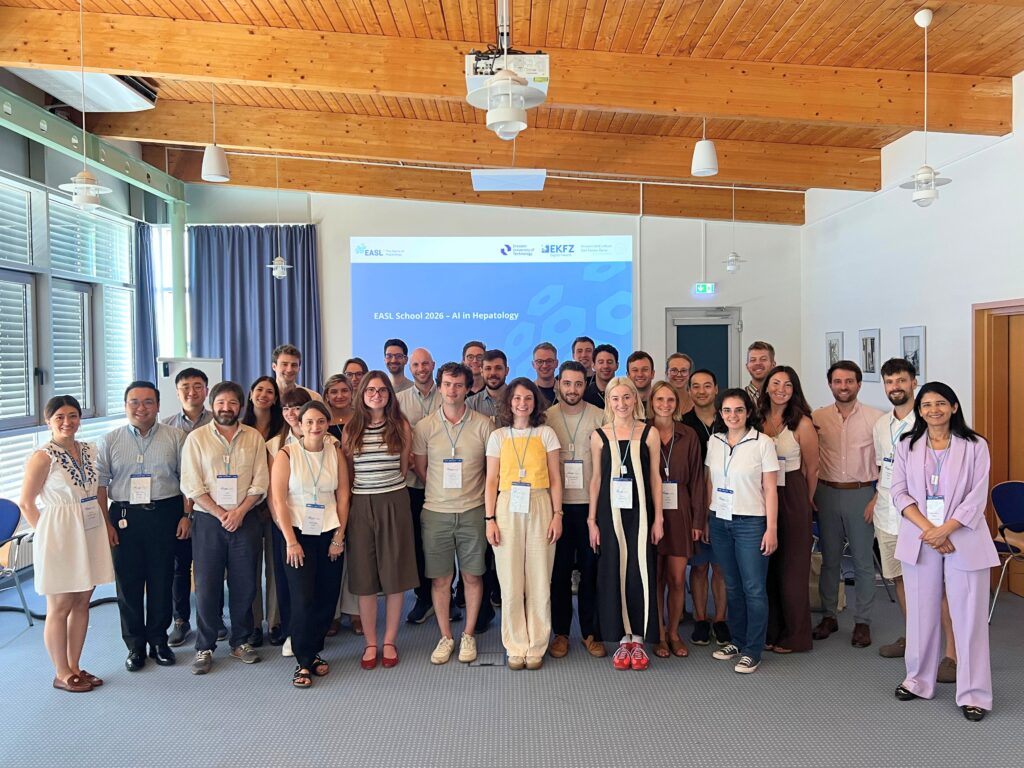
How can artificial intelligence support clinical decision-making in liver medicine – and where are the limits? These questions were at the heart of the EASL School of Artificial Intelligence in Hepatology, held from June 26 – 27, 2026 at the Else Kröner Fresenius Center (EKFZ) for Digital Health at TU Dresden and University Hospital Dresden. Hosted by the Kather Lab, the international summer school welcomed 25 participants from Greece, Denmark, Hungary, Türkiye, China, Myanmar, Belgium, Germany, Italy and the United Kingdom for two days of intensive training at the interface of hepatology and artificial intelligence.
Artificial intelligence is becoming an integral part of clinical medicine. To use these technologies responsibly, clinicians need more than technical skills – they need to understand how AI reaches its conclusions, where limitations lie, and how to critically evaluate AI outputs. Bringing together clinicians and AI researchers in a hands-on environment is an excellent way to build that competence.
A central aim of the summer school was to introduce participants to the field of Clinical AI focusing on AI applications for Hepatology. Clinicians gained a deeper understanding of current AI technologies and their practical applications, while researchers learned more about the clinical challenges that should guide the development of future AI tools.
The scientific program opened with an introduction to AI literacy for clinicians by Prof. Jakob N. Kather, who discussed the fundamentals of artificial intelligence, large language models (LLMs), AI agents and future developments in the field. Throughout the two-day course, participants developed practical skills while also learning to critically evaluate AI-based medical studies and understand the opportunities and limitations of AI-driven clinical decision support.
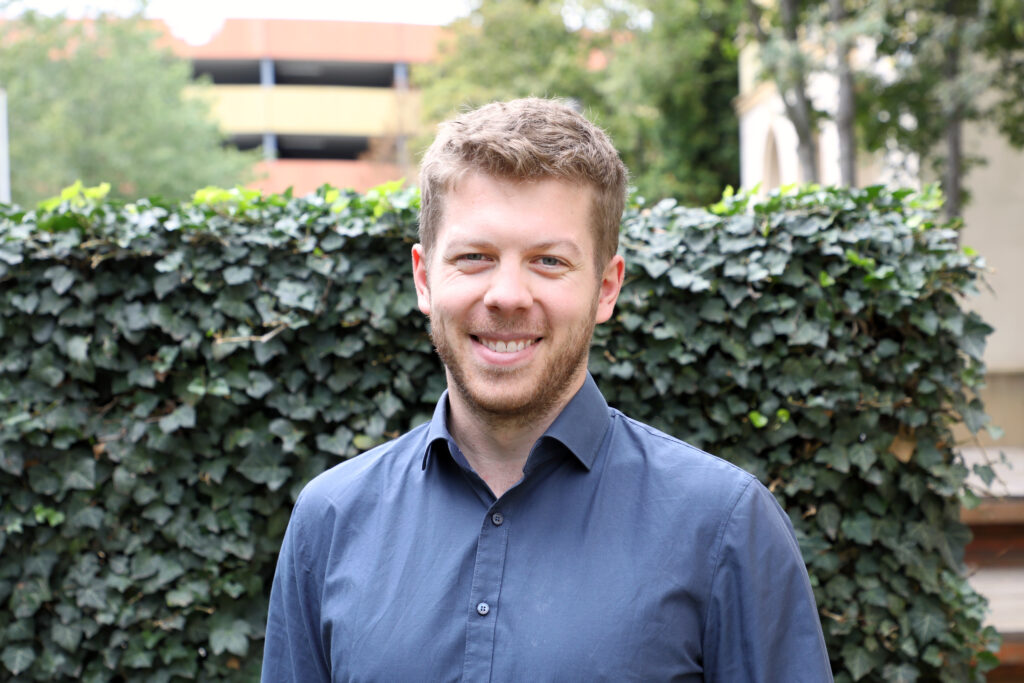
EASL, our European umbrella organization for liver research and care, has made AI training for young researchers and clinicians a strategic priority. This summer school, is a first step toward preparing the next generation of AI-literate clinician-scientists to responsibly integrate AI into hepatology.”
The summer school featured keynote lectures from internationally recognized experts working at the forefront of AI in hepatology.
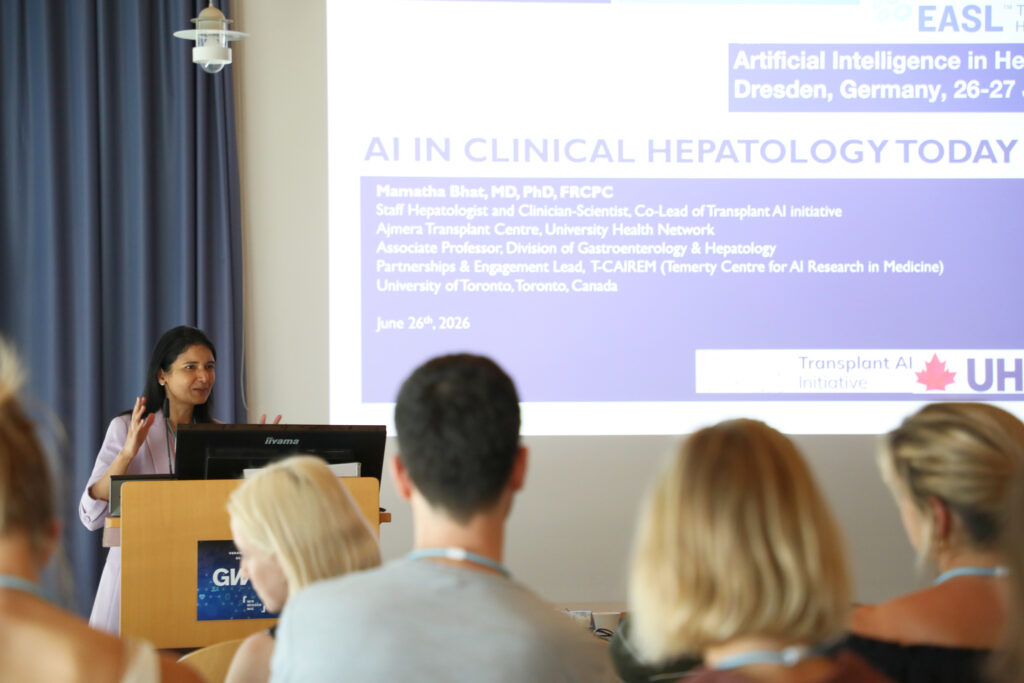
Dr. Mamatha Bhat (University Health Network Toronto, Canada) presented current applications of AI in clinical hepatology, including the development of large language model agents to support complex liver transplantation decisions. Currently, her team is conducting one of the first investigator-initiated silent clinical trials evaluating AI agents in hepatology, in which the AI creates recommendations for decision-making in the background under real-world conditions but without influencing patient care.
On the second day, Prof. Julien Calderaro (Henri Mondor University Hospital, Créteil, France) highlighted advances in AI-supported liver pathology and diagnostic imaging. A long-standing collaborator of the Kather Lab, Calderaro is internationally recognized for combining pathology, liver cancer research and artificial intelligence, and for his leadership in AI education through the annual “AI in Pathology Summer School” in Paris.
Interactive sessions led by Dr. Jan Clusmann addressed the challenges of developing safe and trustworthy clinical AI systems The program concluded with an implementation-oriented session by Prof. Carolin Schneider, who invited participants to turn the ideas and methods discussed during the school into feasible, immediate project plans and ambitious long-term visions .Carolin V. Schneider is a physician-scientist and Junior Professor of Prevention and Genetics of Metabolic Liver Diseases at RWTH Aachen University, where she leads the Research Group for Prevention and Data Science.
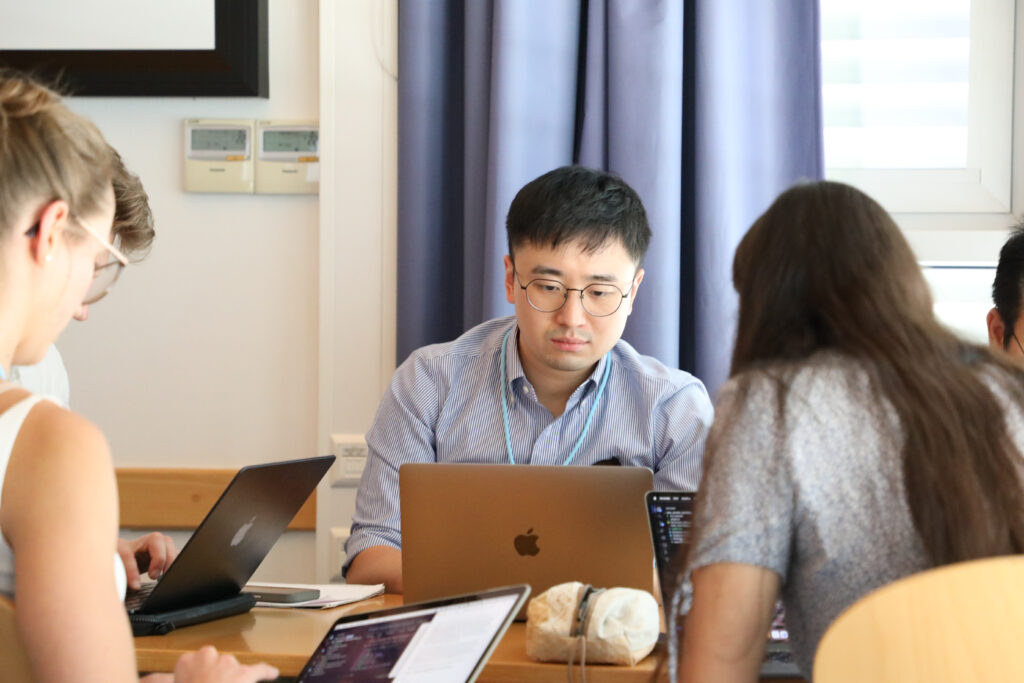
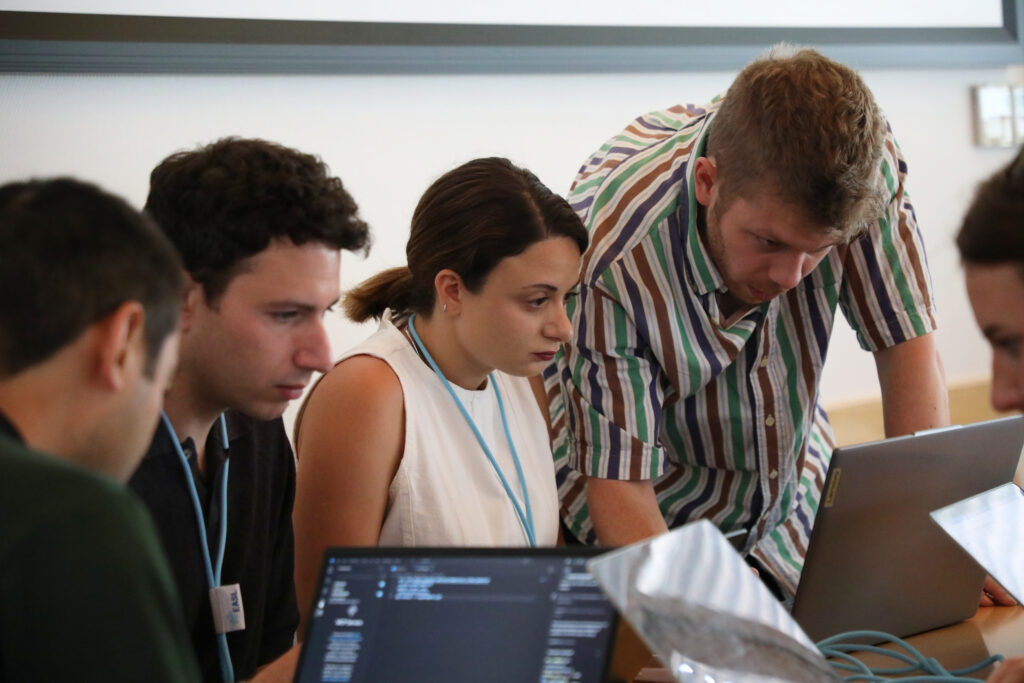
A key aspect of the summer school was its hands-on format. Working in interdisciplinary teams, participants tackled realistic clinical case scenarios and built their first large language model workflows for clinical decision-making. Using locally hosted LLMs together with patient-specific information and current EASL clinical practice guidelines, they explored how AI can support evidence-based decisions while identifying potential limitations and sources of bias.
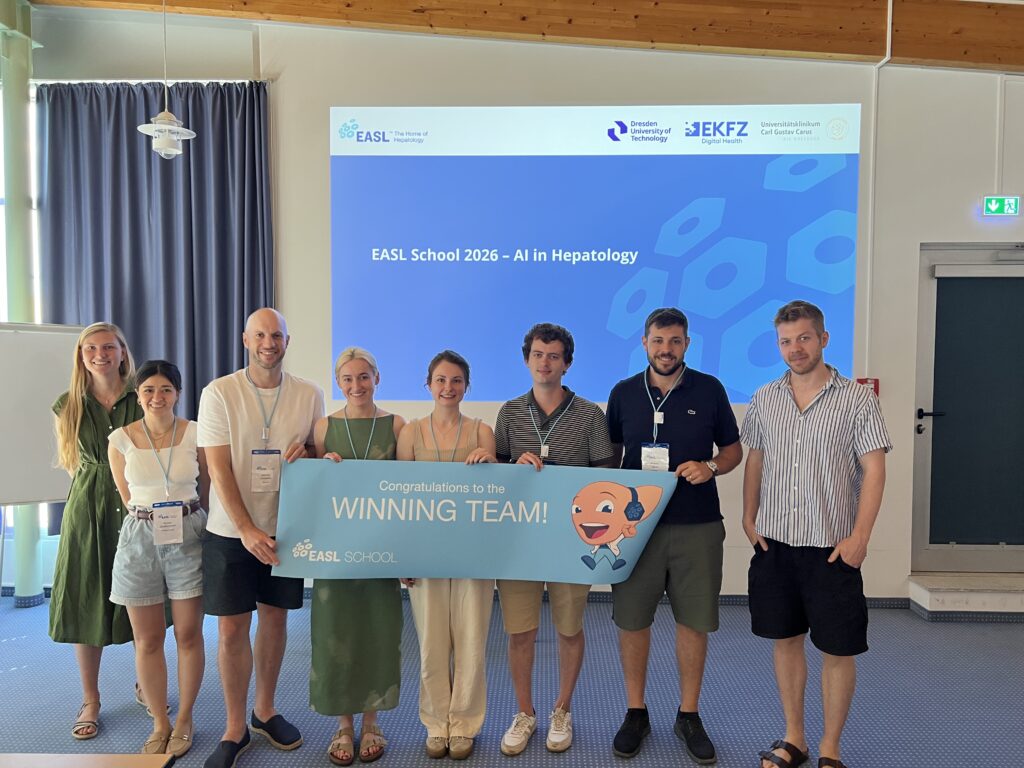
At the end of the course, each team presented its solution to the jury. The resulting prototypes ranged from several extensive analyses evaluating guideline adherence of LLMs on the topic of metabolic liver disease to a guideline chatbot for autoimmune hepatitis. The winning project, a decision support tool for ICU admission for patients with acute-on-chronic liver failure (ACLF), was awarded free registration for the EASL Congress 2027.
The hands-on project was an amazing opportunity to see how much we could build in a short amount of time. Taking inspiration from the keynote speakers, our team built an interactive webpage to help determine whether a patient with ACLF is suitable for ICU admission, turning a complex, often subjective clinical decision into a clear, objective one. The school packed in cutting-edge AI techniques, brilliant discussions and collaborations, and I left with lots of new research ideas”, says Dr. Laura Temperley, gastroenterology academic trainee and summer school participant.
By combining cutting-edge AI research with clinical expertise and practical training, the EASL School of Artificial Intelligence in Hepatology demonstrated how interdisciplinary education can prepare healthcare professionals to develop, evaluate and responsibly implement AI technologies for the benefit of patients.
Surgical Data Science: Fiona Kolbinger starts new research group in Dresden
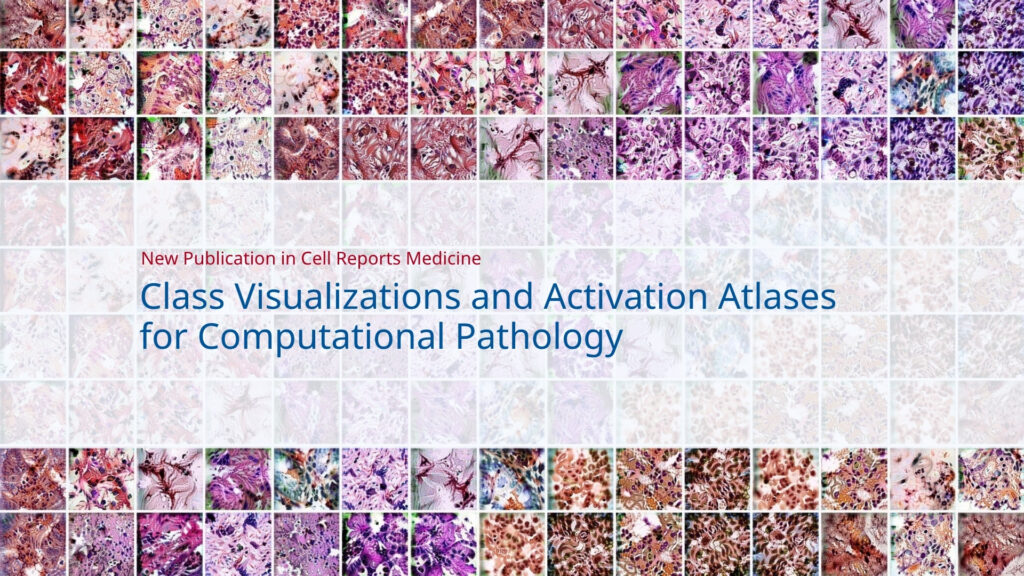
What does AI actually learn from tissue images?
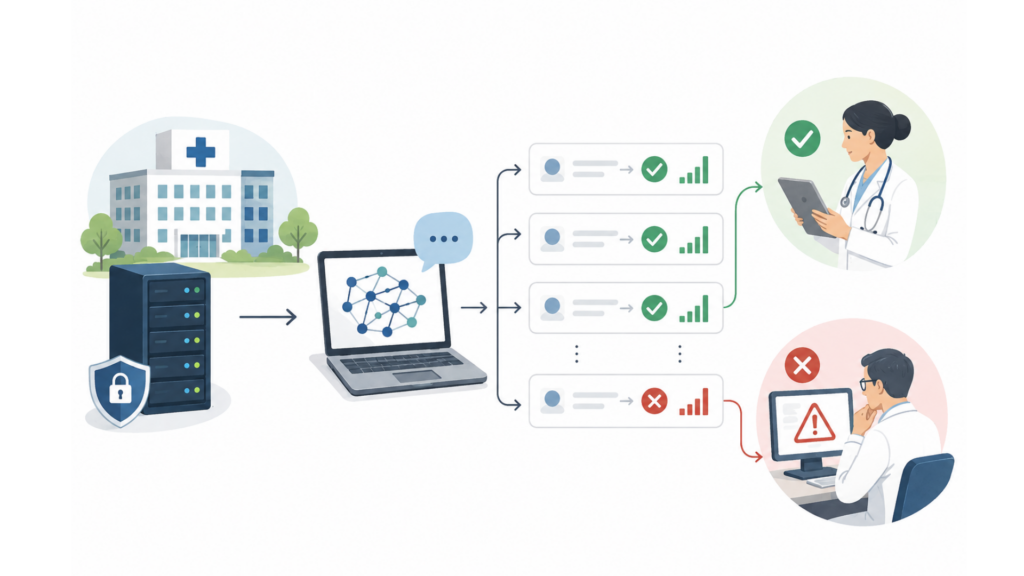
On-premise medical AI agent for reliable clinical decision support