Physics meets Medicine: Hands-on science workshop for secondary school students
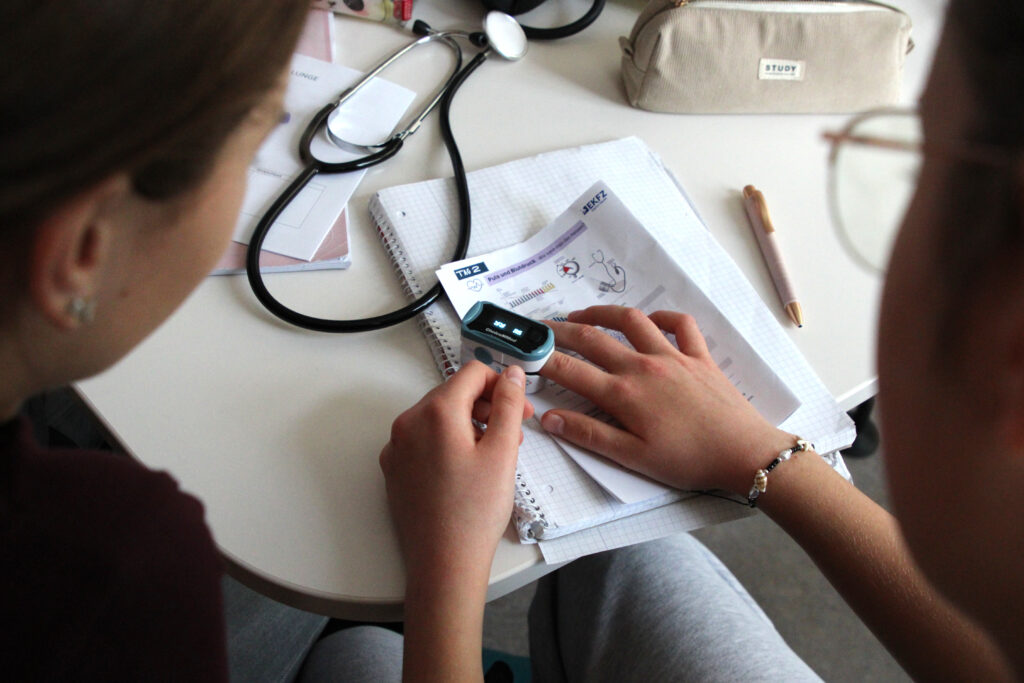
As part of the TUD 2026 Girls’ Experiment Camp, girls discovered first-hand how physical principles are used in medical diagnostics and treatment.
Read more
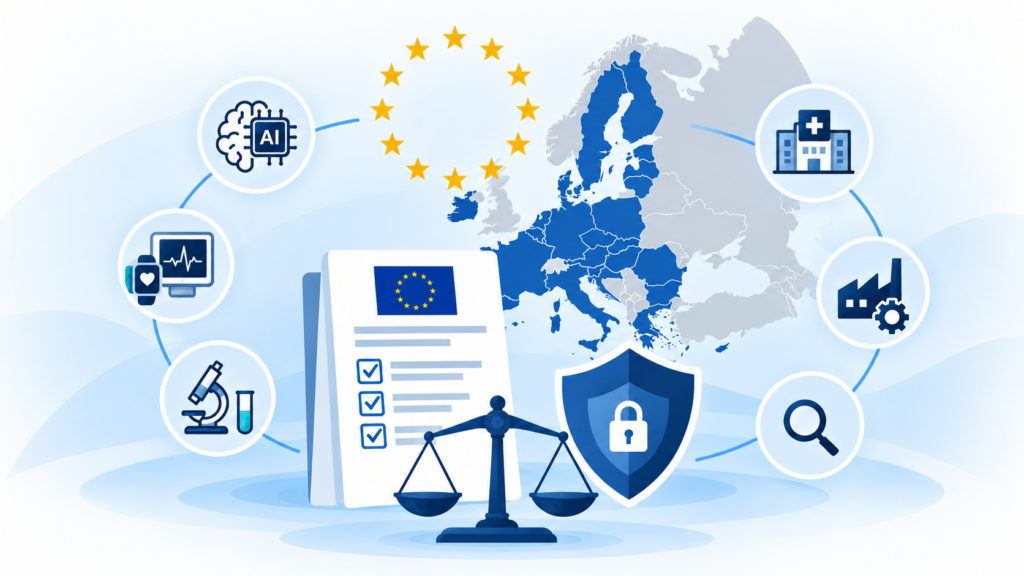
The European Commission is aiming to simplify the regulation of medical devices. In a Comment published in npj Digital Medicine, researchers from the Else Kröner Fresenius Center (EKFZ) for Digital Health at TUD Dresden University of Technology together with colleagues from regulatory law and industry assess the proposed reform. They see important improvements, but also identify regulatory gaps, particularly for AI-enabled medical devices including adaptive and agentic AI systems.
Freyer, O., Cobbaert, K., Schönfelder, A. et al. The proposed reform of the Medical Device Regulation and its implications for AI-enabled medical devices in the EU. npj Digit. Med. 9, 907 (2026).
The European Commission’s proposed MDR reform aims to reduce regulatory burden, simplify requirements and facilitate access to innovative medical technologies. The original proposal aims to amend the European Medical Device Regulation (MDR), the In Vitro Diagnostic Medical Devices Regulation (IVDR), and the AI Act (AIA) in a single legislative package. In their comment, the multidisciplinary team around Prof. Stephen Gilbert, Professor of Medical Device Regulatory Science at TUD, identifies several areas where the reform could be strengthened to keep pace with technological advancements while ensuring patient safety.

The proposed MDR reform is an important step, but key challenges posed by advanced AI systems remain unresolved. Its success will depend on clear regulatory guidance and consistent implementation across the EU. The ongoing legislative process offers an opportunity to address these gaps while safeguarding innovation and patient protection,” says Dr Oscar Freyer, researcher at the Else Kröner Fresenius Center for Digital Health and corresponding author of the Comment.
The proposed revision aims to make risk classification more proportionate, but important boundaries remain unclear and could lead to inconsistent classification. The researchers recommend clarifying when medical software qualifies for the lowest-risk Class I and incorporating more recent international guidance that considers factors such as autonomy, explainability, clinical context and software changes.
The proposed priority and rolling review pathway could accelerate access for highly innovative devices, but its impact will depend on how it is implemented and on the capacity of Notified Bodies. The researchers recommend integrating scientific advice and regulatory review more closely, with transparent eligibility criteria and performance metrics.
The researchers welcome regulatory sandboxes, where developers and regulators can test new approaches under controlled conditions. However, the relationship between sandboxes under the MDR, AI Act and other EU legislation remains unclear. They recommend a harmonized approach and stress that insights generated in sandboxes should ultimately inform the wider regulatory framework.
Relaxing requirements for in-house devices could support innovation in hospitals and academic medical centers. At the same time, the researchers identify risks from extended use without the external oversight required for commercial devices. They recommend risk-proportionate oversight and substantive institutional control over in-house devices.
Predetermined change control plans could allow anticipated modifications without requiring a new conformity assessment each time. However, they do not address changes that cannot be foreseen in advance. The researchers recommend guidance defining evidence requirements, monitoring and reassessment triggers for changes outside an agreed plan.
Broad and agentic AI systems are not specifically addressed by the proposal. The researchers recommend clarifying responsibilities and conformity-assessment boundaries for systems that orchestrate multiple components or perform more complex sequences of tasks.
Physics meets Medicine: Hands-on science workshop for secondary school students
Reforming Medical Device Regulation in the EU

Surgical Data Science: Fiona Kolbinger starts new research group in Dresden