

The research group focuses on user-centered development, acceptance, implementation, and effectiveness of digital healthcare services.
Mission
The central mission of the research group, led by Dr. Lorenz Harst and located at the Center for Evidence-based Healthcare, is the evidence-based translation and implementation of digital healthcare services into everyday healthcare.
It provides answers to the key question: What are predictive parameters for successful transfer of innovation into medical practice with the aim to successfully implement effective digital health innovation in the healthcare system and thus improve the health of individuals and the population?
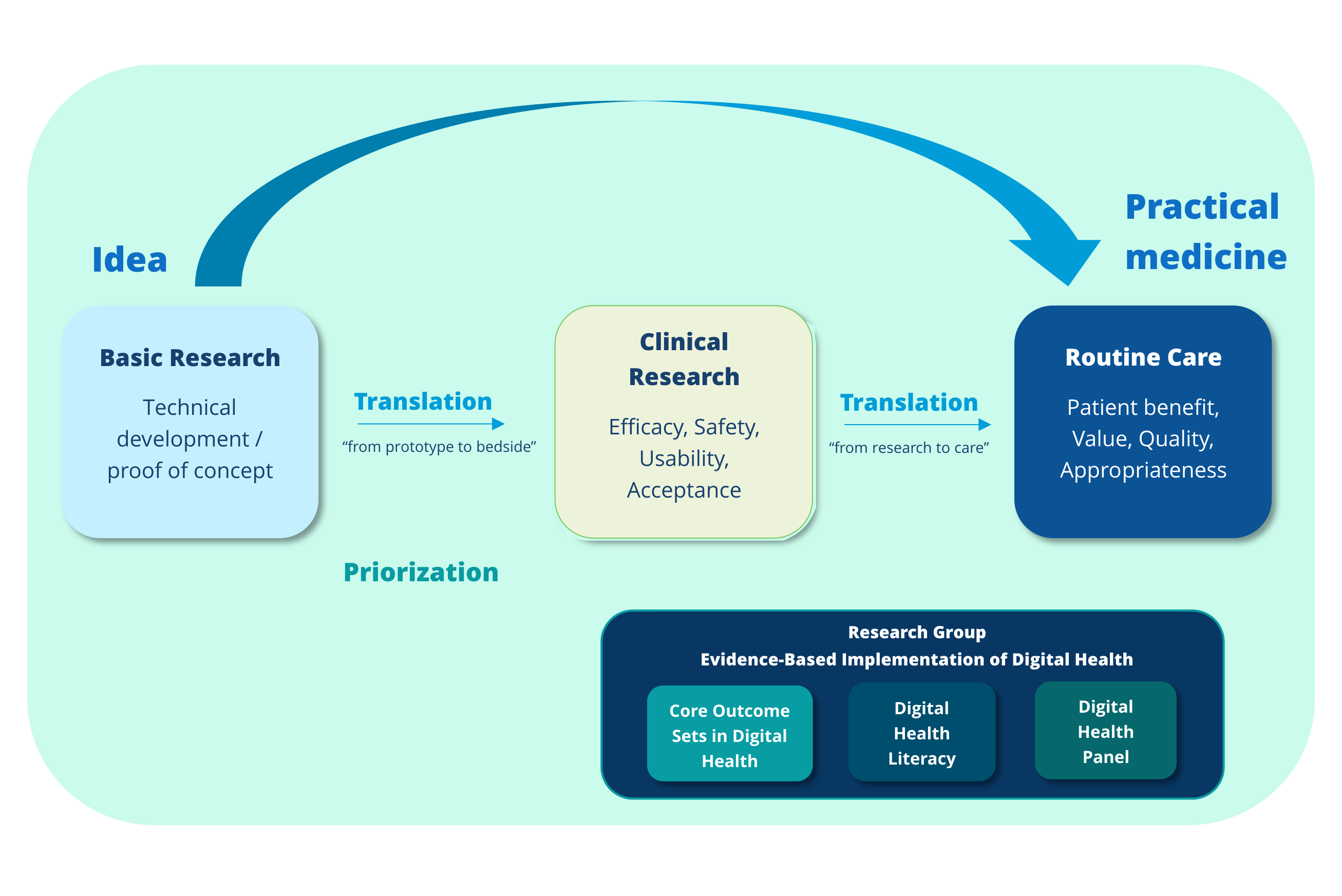
Driving the Future of Digital Healthcare
The work of the research group addresses three interwoven key areas that are critical for the successful and sustainable implementation of digital healthcare services. However, these areas have not yet been sufficiently researched. Our work aims to close this gap by generating the evidence needed for reliable and future-ready recommendations.
Implementing Core Outcomes Sets in Digital Health
In our research we address critical gaps in applying Core Outcome Sets (COS) to digital health interventions, exploring their validity, usability, and relevance in this rapidly evolving field. By aligning COS with the specific needs of digital tools, we can enhance patient-centeredness, evidence comparability and improve guideline development.
Shaping the Future of Digital Health Literacy
In our research we focus on digital health literacy as a key factor for equitable access, effective use, and positive outcomes in digital healthcare. By addressing the digital divide, evaluating the suitability of existing measurement tools, and developing targeted, participatory interventions, we aim to empower users and support the successful implementation of digital health solutions.
Timely Insights Through the Digital Health Panel
Our research group is establishing a regional Digital Health Panel to enable ongoing, up-to-date implementation research. Through regular surveys of a representative population sample, we generate vital insights into acceptance, usage, added value, and key drivers and barriers to the successful integration of digital healthcare solutions.

Dr. Lorenz Harst
Dr. Lorenz Harst is working in the field of digital health at the Center for Evidence-Based Healthcare (ZEGV) at the TUD Medical Faculty since 2017, focusing on both end user acceptance and effectiveness of digital health applications in patient care. He has profound methodological experience in participatory research as well as in clinical studies and data syntheses on effectiveness of (digital) health interventions.
He currently also coordinated the activities in the field of health systems research at ZEGV and runs the “Regionales Gesundheitspanel Sachsen” (GEPASA), which allows for in-depth analyses of the population perspective on, among others, digital health interventions. He has been involved in several projects of the Network University Medicine (NUM projects egePan Unimed and PREPARED) and regularly contributes to projects from the Innovation Funds run at the ZEGV (Mo²Regio, ImplementDiGA, BLICK). He is teaching methods of Evidence-based medicine at the TU Dresden’s model study for medicine in Chemnitz.
Dr. Lorenz Harst is speaker of the working group on science communication in the German Network of Health Services Research (DNVF) e.V. and a member of the working groups on digital health and qualitative research, focusing especially on mixed methods research.
Publications
Kaboth P, Harst L, Schmitt J, Scheibe M. How Many Instruments Do We Need? Strengths, Weaknesses, and Potentials for Further Developments of Digital Health Literacy Measurement Instruments: Narrative Overview of Reviews and Content Analysis. Interact J Med Res (2026);15:e91603, DOI: 10.2196/91603
Harst, L., Wollschlaeger, B., Birnstein, J., Fuchs, T., & Timpel, P. (2021). Evaluation is Key: Providing Appropriate Evaluation Measures for Participatory and User-Centred Design Processes of Healthcare IT. International Journal of Integrated Care, 21(2), 24. https://doi.org/10.5334/ijic.5529
Timpel P., Oswald S., Schwarz P. EH., & Harst L. (2020). Mapping the Evidence on the Effectiveness of Telemedicine Interventions in Diabetes, Dyslipidemia, and Hypertension: An Umbrella Review of Systematic Reviews and Meta-Analyses. Journal of Medical Internet Research, 22(3), e16791, DOI: 10.2196/16791
Harst L, Lantzsch H., & Scheibe M. (2019). Theories Predicting End-User Acceptance of Telemedicine Use: Systematic Review. Journal of Medical Internet Research, 21(5), e13117. https://doi.org/10.2196/13117
Contact

The research group is a cooperation of the Center for Evidence-Based Healthcare at the Dresden Medical Faculty and University Hospital and the Else Kröner Fresenius Center (EKFZ) for Digital Health.
Head of Research Group
Dr. Lorenz Harst

Team member
Pauline Kaboth, M. Sc.

Team member